
Small businesses often operate with limited space, staff, and resources, but their fire-safety responsibilities are no less important than those of larger organizations. A shop, office, salon, small restaurant, workshop, clinic, or home-based business can contain electrical equipment, cooking appliances, paper products, packaging, furniture, chemicals, or other materials that may contribute to fire risk.
At the same time, many people also work from home or run small businesses from residential properties. This makes fire safety relevant not only to commercial premises but also to homes where business activities take place.
The Pakistan Engineering Council includes the Building Code of Pakistan – Fire Safety Provisions 2016 among the country’s building-code resources. The fire-safety provisions emphasize life safety, appropriate means of escape, and multiple safeguards rather than depending on one protective measure.
Why Small Businesses Need Fire Safety
A common misconception is that fire safety is mainly a concern for large factories, shopping malls, or high-rise buildings. In reality, a small property can also experience a serious fire emergency.
Small businesses may have:
- Electrical appliances and computers
- Extension leads and power equipment
- Paper and cardboard packaging
- Furniture and other combustible materials
- Cooking equipment
- Storage areas
- Gas appliances
- Machinery
- Customers or visitors unfamiliar with the building
The combination of these factors makes a basic fire-safety plan an important part of responsible business management.
Fire safety also protects more than the building itself. A fire can affect employees, customers, visitors, business records, equipment, stock, and the ability of the business to continue operating.
Fire Safety and Home-Based Businesses
The phrase “small business” increasingly includes people who work from home. A home office may contain computers, printers, chargers, electrical equipment, documents, packaging materials, and other items that were not originally present in the same quantities.
A home-based business should therefore consider whether its business activities have changed the property’s fire risks.
For example, storing significant quantities of packaging or operating additional electrical equipment may require a review of existing safety arrangements.
The important principle is that fire protection should reflect the actual use of the property rather than simply its label as a “home” or “office.”
How a Fire Alarm Helps
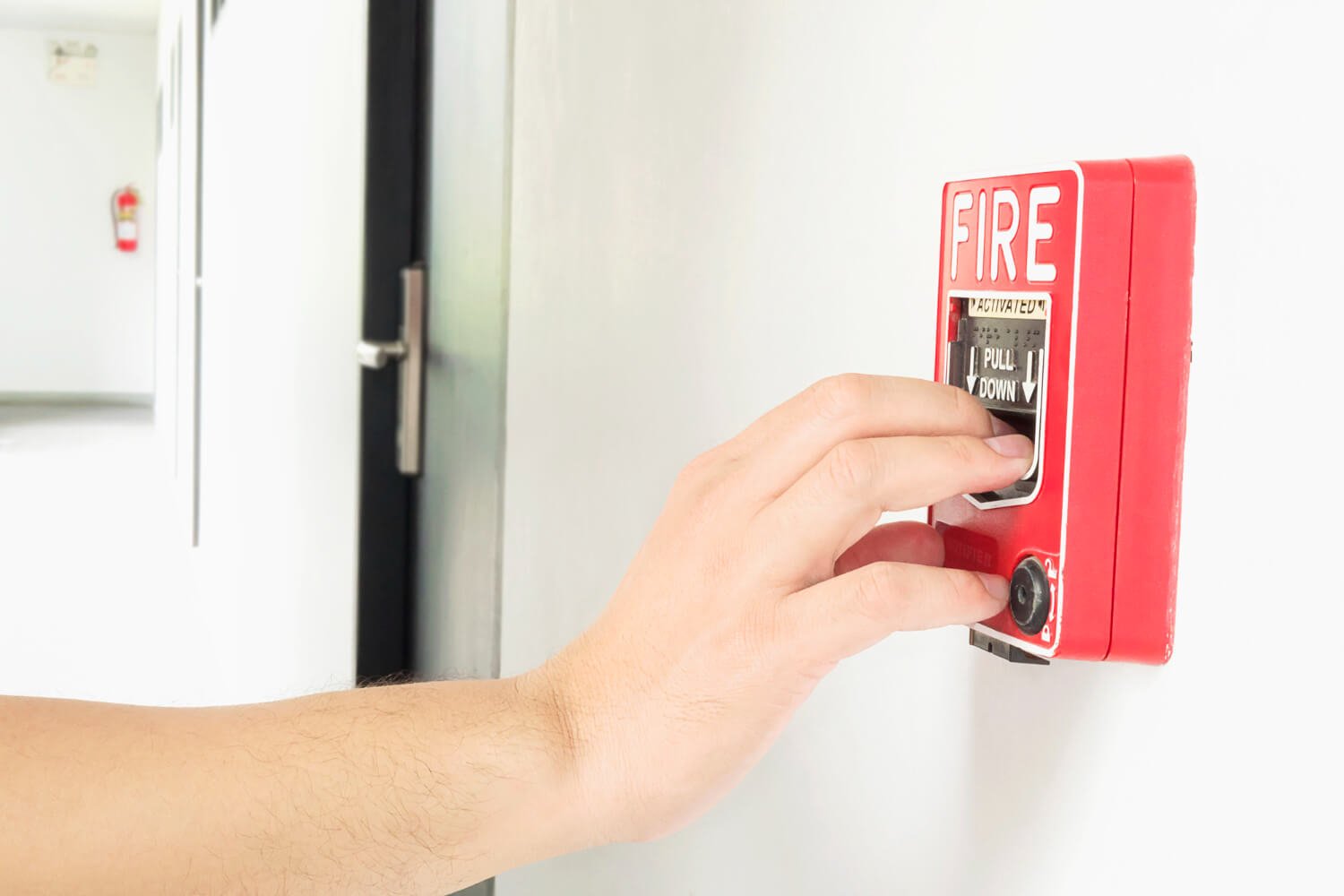
Early warning is one of the most important parts of fire safety. A fire alarm system is designed to detect signs of fire and alert occupants so they can respond according to an emergency plan.
Depending on its design, a system can use smoke detectors, heat detectors, control panels, sounders, and other notification devices.
A fire alarm system in Pakistan may be conventional, addressable, wireless, or another suitable configuration. Flame Defender describes installing conventional and addressable systems as well as wireless and intelligent fire-detection solutions for different types of properties across Pakistan.
The correct system depends on factors such as building size, layout, occupancy, fire risks, and applicable requirements.
Why Early Detection Matters
A fire may begin in an area that is not immediately occupied. For example, an electrical problem could occur in a storage room or equipment area while employees are working elsewhere.
Without suitable detection, valuable time may pass before someone notices the problem.
An alarm can provide an earlier warning and give occupants an opportunity to follow the emergency plan. Flame Defender describes fire alarms as early-warning systems designed to alert occupants when smoke or heat is detected.
An alarm does not eliminate the need for evacuation planning, fire extinguishers, maintenance, or other protective measures. It is one part of a complete fire-safety strategy.
Fire Extinguishers for Small Businesses
Portable fire extinguishers can provide an additional layer of protection for suitable small fires. However, the correct extinguisher depends on the hazards present.
A business may have different requirements depending on whether it contains:
- Ordinary combustible materials
- Electrical equipment
- Cooking appliances
- Flammable liquids
- Machinery
- Other specialized hazards
Extinguishers should be appropriately selected, located, inspected, and maintained.
Employees should also understand that evacuation comes first when a fire is growing, producing dangerous smoke, blocking an escape route, or otherwise becoming unsafe. People should never be encouraged to take unnecessary risks to protect property.
Choosing the Right Fire Protection Equipment
There is no single piece of equipment that is appropriate for every business.
For example, an office, restaurant, warehouse, and home-based tailoring business may have completely different fire risks.
A fire-risk assessment can help determine:
- What hazards are present
- Where detection is needed
- What type of extinguishing equipment is appropriate
- Where emergency equipment should be located
- Which escape routes should be used
- Whether additional systems are necessary
Professional assessment is particularly useful when a business occupies a complex building or uses specialized equipment.
Keeping Escape Routes Clear
A fire alarm is only useful if people can respond safely.
The Building Code of Pakistan states that means of egress should be maintained free and unobstructed, and that exits or routes to exits should be clearly visible or conspicuously indicated.
Small businesses should therefore avoid using corridors, stairways, doorways, and other escape routes as storage areas.
Regular checks can identify problems such as:
- Boxes stored in corridors
- Furniture blocking doors
- Stock placed near exits
- Poorly visible exit signs
- Equipment obstructing escape routes
Keeping routes clear is a simple but important part of fire safety.
Electrical Fire Safety
Electrical equipment is present in almost every modern business.
Computers, printers, refrigerators, air conditioners, lighting, machinery, chargers, and other appliances all require appropriate installation and maintenance.
Businesses should arrange suitable electrical inspections and address damaged equipment or wiring promptly.
Flame Defender also offers electrical thermography testing, which it describes as a way to identify hidden electrical faults that could contribute to electrical fires.
Electrical maintenance should be carried out by appropriately qualified professionals rather than through unsafe repairs or improvised modifications.
Fire Safety for Small Shops
Retail shops may contain clothing, paper products, packaging, furniture, electronics, and other combustible materials.
Stock should be organized so that emergency exits and fire-protection equipment remain accessible.
Shop owners should also consider how customers would evacuate if an alarm sounded. Customers may not know the building layout, so clear exits and appropriate emergency communication are important.
Fire Safety for Small Offices
Small offices commonly contain computers, printers, paper documents, furniture, and electrical equipment.
An office fire-safety plan can include:
- Suitable detection
- Alarm notification
- Emergency exits
- Fire extinguishers appropriate to the risks
- Staff awareness
- Emergency contact procedures
- Regular inspection and maintenance
Employees should know what the alarm means and where they are expected to go during an evacuation.
Fire Safety for Restaurants and Cafés
Restaurants and cafés have additional risks because cooking involves heat and may involve gas, electricity, cooking oils, and ventilation systems.
Kitchen areas may require specialized fire-protection arrangements depending on the equipment and hazards.
The important point is that a restaurant should not rely solely on a portable extinguisher. Detection, evacuation, appropriate suppression, equipment maintenance, and staff awareness can all form part of a broader safety strategy.
Fire Safety for Workshops
Small workshops can contain machinery, electrical equipment, combustible materials, tools, packaging, and other hazards.
A workshop should be assessed according to its actual activities.
Machinery should be maintained appropriately, combustible waste should not be allowed to accumulate unnecessarily, and emergency routes should remain accessible.
Where specialized fire hazards exist, professional advice can help determine what additional protection may be appropriate.
Fire Safety for Home Offices
A home office may seem low-risk, but modern work equipment can increase electrical usage.
Computers, monitors, printers, chargers, networking equipment, and other devices should be maintained appropriately.
A home office should also remain connected to the home’s overall emergency plan. Household members should know how to respond to a fire alarm and where they should go after leaving the building.
The Importance of Maintenance
Installing a fire alarm or purchasing an extinguisher is not the end of fire-safety management.
Equipment can deteriorate because of:
- Dust
- Humidity
- Wear
- Electrical faults
- Damaged components
- Environmental conditions
- Lack of testing
Flame Defender recommends regular maintenance, testing, cleaning, and checking of fire-alarm components to help maintain system reliability.
Small businesses should maintain appropriate records of inspections, testing, repairs, and servicing.
Fire Drills and Emergency Planning
Employees need to know what to do before an emergency occurs.
An emergency plan should identify:
- Alarm procedures
- Emergency exits
- Assembly areas
- Staff responsibilities
- Emergency contacts
- Procedures for assisting people who may need additional support
- Rules regarding re-entry into the building
Fire drills can help identify weaknesses in an evacuation plan.
The Building Code of Pakistan includes provisions addressing emergency egress and relocation drills, including predetermined relocation areas and written records where applicable.
Drills should be conducted safely and should never involve creating an actual fire or dangerous smoke condition.
Protecting Employees and Customers
Small businesses may have employees who know the premises well, but customers and visitors generally do not.
This makes clear communication particularly important.
A properly designed alarm can provide a common warning, while public-address systems may provide additional emergency instructions in larger or more complex premises. Flame Defender describes public-address systems that can be integrated with fire alarm infrastructure for emergency communication.
The goal is to make emergency information understandable and accessible without creating confusion.
Multiple Safeguards Are Better
One of the strongest principles in fire safety is not relying on a single protective measure.
The Building Code of Pakistan specifically states that building safety should not depend solely on one safeguard and that additional safeguards should be considered if one measure becomes ineffective.
A small business might therefore use several layers:
- Fire prevention
- Smoke or heat detection
- Fire alarm notification
- Portable extinguishers
- Emergency exits
- Emergency communication
- Staff training
- Evacuation planning
- Regular inspections
- Professional maintenance
Each measure has a different purpose.
Why Fire Alarm Maintenance Matters
A neglected alarm system can become less reliable over time.
Detectors can become affected by dust or environmental conditions, while batteries, wiring, control panels, and notification devices can also require attention.
Flame Defender states that its maintenance services include cleaning, testing, calibration, identification of faults, and replacement of components where necessary.
Small businesses should therefore include alarm maintenance in their normal property-management schedule.
Fire Safety During Business Expansion
Fire risks can change as a business grows.
A company might:
- Add new equipment
- Increase electrical usage
- Store more stock
- Renovate its premises
- Add employees
- Expand into another room
- Change its business activities
- Move to a larger building
Each change can affect the property’s fire-safety requirements.
For this reason, fire protection should be reviewed whenever there is a significant change to the building or its use.
Professional Fire-Safety Assessment
Professional assessment can help small businesses understand their actual risks.
A qualified specialist can consider the building’s layout, occupancy, equipment, electrical systems, storage arrangements, evacuation routes, detection requirements, and other factors.
Pakistan Engineering Council’s Foreign CO Portal identifies installation, commissioning, and maintenance of fire detection, alarm, and suppression systems as a specialized engineering area.
This highlights that fire-protection systems are technical installations that should be appropriately designed and maintained.
The Role of Flame Defender
Flame Defender provides fire-safety services in Pakistan, including fire alarm installation, testing, maintenance, and system upgrades. Its published services cover conventional, addressable, wireless, and intelligent fire alarm solutions.
The company also describes fire-suppression services that include site surveys, risk assessment, system design, installation, commissioning, inspection, testing, and preventive maintenance.
For a small business, the most appropriate solution should be based on its individual risks and building characteristics rather than choosing equipment simply because it is inexpensive or widely available.
Why Home Fire Safety Matters Too
The title of this article also raises an important point: fire safety is not only a business issue.
Homes contain many of the same basic hazards found in small offices, including electrical equipment, cooking appliances, furniture, paper products, chargers, and other combustible materials.
When a home is also used as a workplace, additional equipment and storage can increase the need for careful planning.
Every household should have a basic understanding of emergency exits, alarm signals, and where everyone should gather after leaving the building.
Fire Safety Is an Ongoing Responsibility
Fire protection should not be treated as a one-time purchase.
A responsible small business can periodically review:
- Fire alarm condition
- Detector performance
- Extinguishers
- Electrical equipment
- Emergency exits
- Exit signs
- Emergency lighting where applicable
- Staff training
- Evacuation plans
- Fire-safety records
Regular reviews can help identify changes before they become larger problems.
Final Thoughts
Small businesses do not need to be large to need serious fire protection. A single room, shop, office, restaurant, workshop, or home-based business can contain enough hazards for a fire to become a major emergency.
The safest approach is to use multiple layers of protection. Fire prevention can reduce risk, detection can provide early warning, alarms can alert occupants, extinguishers can provide an additional layer of protection for appropriate small fires, and evacuation planning can help people move away from danger.
A reliable fire alarm system in Pakistan can therefore be an important part of a small business’s overall safety strategy, but it should work alongside appropriate equipment, clear escape routes, staff awareness, and regular maintenance.
For businesses and homes alike, the goal is simple: identify risks early, maintain safety systems properly, and make sure everyone knows what to do when an emergency occurs.
FAQs
1. Why do small businesses need fire safety?
Small businesses can contain electrical equipment, combustible materials, cooking appliances, machinery, and other hazards. Fire-safety measures help protect employees, customers, property, and business operations.
2. Is a fire alarm necessary for a small business?
The applicable requirements depend on the building, occupancy, size, use, and relevant regulations. A professional assessment can help determine the appropriate detection and alarm arrangements.
3. How does a fire alarm system in Pakistan work?
A fire alarm system can use devices such as smoke or heat detectors to identify signs of fire. A control panel processes the signal and activates notification devices so occupants can receive an early warning.
4. Does a home-based business need fire-safety planning?
Yes. If business activities add electrical equipment, stock, packaging, machinery, or other hazards, the home’s fire risks may change. The business area should be considered as part of the property’s overall fire-safety plan.
5. Does a fire alarm system require regular maintenance?
Yes. Regular inspection, testing, cleaning, and maintenance help identify faults and keep detectors, control panels, batteries, and notification devices working properly.
Small businesses often operate with limited space, staff, and resources, but their fire-safety responsibilities are no less important than those of larger organizations. A shop, office, salon, small restaurant, workshop, clinic, or home-based business can contain electrical equipment, cooking appliances, paper products, packaging, furniture, chemicals, or other materials that may contribute to fire risk.
At the same time, many people also work from home or run small businesses from residential properties. This makes fire safety relevant not only to commercial premises but also to homes where business activities take place.
The Pakistan Engineering Council includes the Building Code of Pakistan – Fire Safety Provisions 2016 among the country’s building-code resources. The fire-safety provisions emphasize life safety, appropriate means of escape, and multiple safeguards rather than depending on one protective measure.
Why Small Businesses Need Fire Safety
A common misconception is that fire safety is mainly a concern for large factories, shopping malls, or high-rise buildings. In reality, a small property can also experience a serious fire emergency.
Small businesses may have:
- Electrical appliances and computers
- Extension leads and power equipment
- Paper and cardboard packaging
- Furniture and other combustible materials
- Cooking equipment
- Storage areas
- Gas appliances
- Machinery
- Customers or visitors unfamiliar with the building
The combination of these factors makes a basic fire-safety plan an important part of responsible business management.
Fire safety also protects more than the building itself. A fire can affect employees, customers, visitors, business records, equipment, stock, and the ability of the business to continue operating.
Fire Safety and Home-Based Businesses
The phrase “small business” increasingly includes people who work from home. A home office may contain computers, printers, chargers, electrical equipment, documents, packaging materials, and other items that were not originally present in the same quantities.
A home-based business should therefore consider whether its business activities have changed the property’s fire risks.
For example, storing significant quantities of packaging or operating additional electrical equipment may require a review of existing safety arrangements.
The important principle is that fire protection should reflect the actual use of the property rather than simply its label as a “home” or “office.”
How a Fire Alarm Helps
Early warning is one of the most important parts of fire safety. A fire alarm system is designed to detect signs of fire and alert occupants so they can respond according to an emergency plan.
Depending on its design, a system can use smoke detectors, heat detectors, control panels, sounders, and other notification devices.
A fire alarm system in Pakistan may be conventional, addressable, wireless, or another suitable configuration. Flame Defender describes installing conventional and addressable systems as well as wireless and intelligent fire-detection solutions for different types of properties across Pakistan.
The correct system depends on factors such as building size, layout, occupancy, fire risks, and applicable requirements.
Why Early Detection Matters
A fire may begin in an area that is not immediately occupied. For example, an electrical problem could occur in a storage room or equipment area while employees are working elsewhere.
Without suitable detection, valuable time may pass before someone notices the problem.
An alarm can provide an earlier warning and give occupants an opportunity to follow the emergency plan. Flame Defender describes fire alarms as early-warning systems designed to alert occupants when smoke or heat is detected.
An alarm does not eliminate the need for evacuation planning, fire extinguishers, maintenance, or other protective measures. It is one part of a complete fire-safety strategy.
Fire Extinguishers for Small Businesses
Portable fire extinguishers can provide an additional layer of protection for suitable small fires. However, the correct extinguisher depends on the hazards present.
A business may have different requirements depending on whether it contains:
- Ordinary combustible materials
- Electrical equipment
- Cooking appliances
- Flammable liquids
- Machinery
- Other specialized hazards
Extinguishers should be appropriately selected, located, inspected, and maintained.
Employees should also understand that evacuation comes first when a fire is growing, producing dangerous smoke, blocking an escape route, or otherwise becoming unsafe. People should never be encouraged to take unnecessary risks to protect property.
Choosing the Right Fire Protection Equipment
There is no single piece of equipment that is appropriate for every business.
For example, an office, restaurant, warehouse, and home-based tailoring business may have completely different fire risks.
A fire-risk assessment can help determine:
- What hazards are present
- Where detection is needed
- What type of extinguishing equipment is appropriate
- Where emergency equipment should be located
- Which escape routes should be used
- Whether additional systems are necessary
Professional assessment is particularly useful when a business occupies a complex building or uses specialized equipment.
Keeping Escape Routes Clear
A fire alarm is only useful if people can respond safely.
The Building Code of Pakistan states that means of egress should be maintained free and unobstructed, and that exits or routes to exits should be clearly visible or conspicuously indicated.
Small businesses should therefore avoid using corridors, stairways, doorways, and other escape routes as storage areas.
Regular checks can identify problems such as:
- Boxes stored in corridors
- Furniture blocking doors
- Stock placed near exits
- Poorly visible exit signs
- Equipment obstructing escape routes
Keeping routes clear is a simple but important part of fire safety.
Electrical Fire Safety
Electrical equipment is present in almost every modern business.
Computers, printers, refrigerators, air conditioners, lighting, machinery, chargers, and other appliances all require appropriate installation and maintenance.
Businesses should arrange suitable electrical inspections and address damaged equipment or wiring promptly.
Flame Defender also offers electrical thermography testing, which it describes as a way to identify hidden electrical faults that could contribute to electrical fires.
Electrical maintenance should be carried out by appropriately qualified professionals rather than through unsafe repairs or improvised modifications.
Fire Safety for Small Shops
Retail shops may contain clothing, paper products, packaging, furniture, electronics, and other combustible materials.
Stock should be organized so that emergency exits and fire-protection equipment remain accessible.
Shop owners should also consider how customers would evacuate if an alarm sounded. Customers may not know the building layout, so clear exits and appropriate emergency communication are important.
Fire Safety for Small Offices
Small offices commonly contain computers, printers, paper documents, furniture, and electrical equipment.
An office fire-safety plan can include:
- Suitable detection
- Alarm notification
- Emergency exits
- Fire extinguishers appropriate to the risks
- Staff awareness
- Emergency contact procedures
- Regular inspection and maintenance
Employees should know what the alarm means and where they are expected to go during an evacuation.
Fire Safety for Restaurants and Cafés
Restaurants and cafés have additional risks because cooking involves heat and may involve gas, electricity, cooking oils, and ventilation systems.
Kitchen areas may require specialized fire-protection arrangements depending on the equipment and hazards.
The important point is that a restaurant should not rely solely on a portable extinguisher. Detection, evacuation, appropriate suppression, equipment maintenance, and staff awareness can all form part of a broader safety strategy.
Fire Safety for Workshops
Small workshops can contain machinery, electrical equipment, combustible materials, tools, packaging, and other hazards.
A workshop should be assessed according to its actual activities.
Machinery should be maintained appropriately, combustible waste should not be allowed to accumulate unnecessarily, and emergency routes should remain accessible.
Where specialized fire hazards exist, professional advice can help determine what additional protection may be appropriate.
Fire Safety for Home Offices
A home office may seem low-risk, but modern work equipment can increase electrical usage.
Computers, monitors, printers, chargers, networking equipment, and other devices should be maintained appropriately.
A home office should also remain connected to the home’s overall emergency plan. Household members should know how to respond to a fire alarm and where they should go after leaving the building.
The Importance of Maintenance
Installing a fire alarm or purchasing an extinguisher is not the end of fire-safety management.
Equipment can deteriorate because of:
- Dust
- Humidity
- Wear
- Electrical faults
- Damaged components
- Environmental conditions
- Lack of testing
Flame Defender recommends regular maintenance, testing, cleaning, and checking of fire-alarm components to help maintain system reliability.
Small businesses should maintain appropriate records of inspections, testing, repairs, and servicing.
Fire Drills and Emergency Planning
Employees need to know what to do before an emergency occurs.
An emergency plan should identify:
- Alarm procedures
- Emergency exits
- Assembly areas
- Staff responsibilities
- Emergency contacts
- Procedures for assisting people who may need additional support
- Rules regarding re-entry into the building
Fire drills can help identify weaknesses in an evacuation plan.
The Building Code of Pakistan includes provisions addressing emergency egress and relocation drills, including predetermined relocation areas and written records where applicable.
Drills should be conducted safely and should never involve creating an actual fire or dangerous smoke condition.
Protecting Employees and Customers
Small businesses may have employees who know the premises well, but customers and visitors generally do not.
This makes clear communication particularly important.
A properly designed alarm can provide a common warning, while public-address systems may provide additional emergency instructions in larger or more complex premises. Flame Defender describes public-address systems that can be integrated with fire alarm infrastructure for emergency communication.
The goal is to make emergency information understandable and accessible without creating confusion.
Multiple Safeguards Are Better
One of the strongest principles in fire safety is not relying on a single protective measure.
The Building Code of Pakistan specifically states that building safety should not depend solely on one safeguard and that additional safeguards should be considered if one measure becomes ineffective.
A small business might therefore use several layers:
- Fire prevention
- Smoke or heat detection
- Fire alarm notification
- Portable extinguishers
- Emergency exits
- Emergency communication
- Staff training
- Evacuation planning
- Regular inspections
- Professional maintenance
Each measure has a different purpose.
Why Fire Alarm Maintenance Matters
A neglected alarm system can become less reliable over time.
Detectors can become affected by dust or environmental conditions, while batteries, wiring, control panels, and notification devices can also require attention.
Flame Defender states that its maintenance services include cleaning, testing, calibration, identification of faults, and replacement of components where necessary.
Small businesses should therefore include alarm maintenance in their normal property-management schedule.
Fire Safety During Business Expansion
Fire risks can change as a business grows.
A company might:
- Add new equipment
- Increase electrical usage
- Store more stock
- Renovate its premises
- Add employees
- Expand into another room
- Change its business activities
- Move to a larger building
Each change can affect the property’s fire-safety requirements.
For this reason, fire protection should be reviewed whenever there is a significant change to the building or its use.
Professional Fire-Safety Assessment
Professional assessment can help small businesses understand their actual risks.
A qualified specialist can consider the building’s layout, occupancy, equipment, electrical systems, storage arrangements, evacuation routes, detection requirements, and other factors.
Pakistan Engineering Council’s Foreign CO Portal identifies installation, commissioning, and maintenance of fire detection, alarm, and suppression systems as a specialized engineering area.
This highlights that fire-protection systems are technical installations that should be appropriately designed and maintained.
The Role of Flame Defender
Flame Defender provides fire-safety services in Pakistan, including fire alarm installation, testing, maintenance, and system upgrades. Its published services cover conventional, addressable, wireless, and intelligent fire alarm solutions.
The company also describes fire-suppression services that include site surveys, risk assessment, system design, installation, commissioning, inspection, testing, and preventive maintenance.
For a small business, the most appropriate solution should be based on its individual risks and building characteristics rather than choosing equipment simply because it is inexpensive or widely available.
Why Home Fire Safety Matters Too
The title of this article also raises an important point: fire safety is not only a business issue.
Homes contain many of the same basic hazards found in small offices, including electrical equipment, cooking appliances, furniture, paper products, chargers, and other combustible materials.
When a home is also used as a workplace, additional equipment and storage can increase the need for careful planning.
Every household should have a basic understanding of emergency exits, alarm signals, and where everyone should gather after leaving the building.
Fire Safety Is an Ongoing Responsibility
Fire protection should not be treated as a one-time purchase.
A responsible small business can periodically review:
- Fire alarm condition
- Detector performance
- Extinguishers
- Electrical equipment
- Emergency exits
- Exit signs
- Emergency lighting where applicable
- Staff training
- Evacuation plans
- Fire-safety records
Regular reviews can help identify changes before they become larger problems.
Final Thoughts
Small businesses do not need to be large to need serious fire protection. A single room, shop, office, restaurant, workshop, or home-based business can contain enough hazards for a fire to become a major emergency.
The safest approach is to use multiple layers of protection. Fire prevention can reduce risk, detection can provide early warning, alarms can alert occupants, extinguishers can provide an additional layer of protection for appropriate small fires, and evacuation planning can help people move away from danger.
A reliable fire alarm system in Pakistan can therefore be an important part of a small business’s overall safety strategy, but it should work alongside appropriate equipment, clear escape routes, staff awareness, and regular maintenance.
For businesses and homes alike, the goal is simple: identify risks early, maintain safety systems properly, and make sure everyone knows what to do when an emergency occurs.
FAQs
1. Why do small businesses need fire safety?
Small businesses can contain electrical equipment, combustible materials, cooking appliances, machinery, and other hazards. Fire-safety measures help protect employees, customers, property, and business operations.
2. Is a fire alarm necessary for a small business?
The applicable requirements depend on the building, occupancy, size, use, and relevant regulations. A professional assessment can help determine the appropriate detection and alarm arrangements.
3. How does a fire alarm system in Pakistan work?
A fire alarm system can use devices such as smoke or heat detectors to identify signs of fire. A control panel processes the signal and activates notification devices so occupants can receive an early warning.
4. Does a home-based business need fire-safety planning?
Yes. If business activities add electrical equipment, stock, packaging, machinery, or other hazards, the home’s fire risks may change. The business area should be considered as part of the property’s overall fire-safety plan.
5. Does a fire alarm system require regular maintenance?
Yes. Regular inspection, testing, cleaning, and maintenance help identify faults and keep detectors, control panels, batteries, and notification devices working properly.